Friday, April 24, 2015

Find-Your-Park… mine is west (& east) of the Pecos.

Pecos - once a mighty pueblo
Earlier this month the National Park Service (NPS) kicked-off the “Find Your Park” program. The campaign hopes to encourage us to share our National Park area experiences as part of the NPS Centennial celebration: I’ll tell you about Pecos, the park I’ve chosen, and a special personal experience in a few moments (after all, I live about 20-miles “west of the Pecos”)…

Kiva entrance - Pecos NHP
Many of us know the National Park Service Organic Act was signed into law by President Woodrow Wilson on August 25, 1916, and the NPS was created to protect parks, monuments, and reservations with a special mandate: “to conserve the scenery and the natural and historic objects and the wild life therein and to provide for the enjoyment of the same in such manner and by such means as will leave them unimpaired for the enjoyment of future generations.”  http://en.wikipedia.org/wiki/National_Park_Service_Organic_Act
North Pueblo- room blocks on right
“According to the National Park Service, Find You Park invites the public to see that a national park is more than just a place - it can be a feeling, a state of mind, or a sense of American pride. Beyond vast landscapes, the campaign highlights historical, urban, and cultural parks, as well as National Park Service programs that protect, preserve and share nature, culture, and history in communities nationwide. Further, Find Your Park encourages people to find their own personal connections within the network of national parks and public lands.” You can check-it-out at: www.findyourpark.com
Trash IS Treasure to archaeologists
OK, my park is Pecos National Historical Park: I’ve been going for years, and it is a gem. On Tuesday I joined fellow Santa Fe National Forest Site Stewards on our walk back through time. The area has had visitors since at least Paleo-Indian days, and we are just some of the more recent ones. The area certainly experienced use by Archaic era hunter-gatherer groups, as it is along a natural migration route skirting to the south of the Sangre de Cristo Mountains. First pit-house villages were ca. 600-800 AD/CE.
Sangre de Cristo Mountains
A real development boom came hundreds of centuries before the Spanish, as ancestral pueblo societies & nations moved into the area in concentrated numbers in the late 13th Century. Due to trade between both the Plains Tribes and Rio Grande Pueblos they grew (wealthier and stronger). Then about 1540 new visitors arrived: The Coronado Expedition. The Spanish were received well, but not exactly buying what Coronado was selling it was at Pecos that he got steered to present-day Kansas (in his quest to find the golden cities of Cibola). The Spanish came back, building their first mission at Pecos in 1610. A larger 17th Century mission was razed during the Pueblo Revolt of 1680, when the Spanish were driven from New Mexico (to El Paso and beyond) for 12-years. With the second Spanish “entrada” in New Mexico (1692) came a new mission at Pecos. Signs of the Old Santa Fe Trail, that brought “Yankee Traders” from the U.S., are also found “a stones throw” from the last mission site, and descendants from Pecos are still found at the Pueblo of Jemez (they have a Lt. Governor position for Pecos): a long and proud history.
Gen. Sibley
With the coming of the U.S. Civil War, in the spring of 1862 a Confederate Expeditionary Force under the command of Gen. H.H. Sibley was hoping to capture the gold & silver of Colorado, and then push west to do the same in California. However, Pecos became the temporary staging area for Union forces from Colorado led by Col. Edward Canby. They were there to block the Confederate’s northerly advance. The two sides battled a short distance west of Pecos, at Glorieta Pass (now a unit of Pecos NHP). http://en.wikipedia.org/wiki/Battle_of_Glorieta_Pass
Kidder & crew
Anyone that has studied archaeology in the southwest U.S. is indebted to Alfred Vincent (A.V.) Kidder for his early 20th Century work at Pecos and the establishment of a ceramic chronology we still use today. Kidder’s seminal works at Pecos, resulted in the 1st gathering of archaeologists working in the southwest. It was convened at Pecos. The Pecos Conference remains an annual event for professionals. Though it now moves location, it is still called the Pecos Conference and returns to Pecos every 5-years. In 1935 the State of New Mexico created Pecos State Monument from lands acquired from the Forked Lightning Ranch (then owned by a rodeo personality known as “Tex Austin”).
18th Century church
The NPS became involved in the mid-1960’s, when Pecos was declared a National Monument. My relationship started in 1989 as the Southwest Region’s Ranger Activities Specialist (EMS, SAR, fees, radios, uniforms, law enforcement, fire, etc.). It was furthered in the mid-90’s when the Regional Resources Protection Unit was down-sized to one person (me). Our archaeologist (Judy Reed) took a similar position at Pecos, and I was in need of a secure evidence vault for the sensitive materials I was entrusted to protect (pending case dispositions). 
Greer & Buddy
As it turned out, Buddy Fogelson (“Dallas oil man”) and Greer Garson (the movie actress) had acquired the Forked Lightning Ranch, and it eventually became part of Pecos National Historical Park. The ranch house had an old walk-in refrigerator unit (for their entertaining & events) that made a perfect secure evidence area. The Chief Ranger (Gary Hartley) had the outer lock, and I had the inner lock.
Church interior
My admiration for Pecos was cemented in the late 1990’s: an event that, in retrospect, I’d spent my career working towards (ever since a sundance near Lodge Grass, along the Little Bighorn River in July ’75).  In the early spring of 1999 I received a telephone call informing me that the Park had been consulting with the Pueblo of Jemez and many other pueblos & tribes for 8-years regarding the repatriation and reburial of the remains from over 2,000 individuals previously buried at Pecos (and a few associated sites). They had been excavated and removed to The Harvard Peabody museums in Massachusetts during the early 20th Century. As part of the largest return under the Native American Graves Protection & Repatriation Act of 1990 representatives from the Pueblo & Park would be traveling east to receive and escort the ancestors back to Pecos in late May. I was asked to be the Operations Section Chief for the Incident Management Team involved with the event.

Repatriation at Pecos
It was a great day in late May, with hundreds of tribal pilgrims accompanying their ancestors the final miles back home to finally rest. When the reburials, blessings and prayers were concluded, signs from the heavens opened with purifying rain that indicated: “this is good.” I had never received such heartfelt thanks as that from tribal members that day; many eyes were swollen with tears of joy that further sanctified the ground and the occasion. I was honored to be there (a humbling experience); certainly one of the highlights of this Ranger’s career. The Nov. 2000 issue of “National Geographic,” page 118 chronicles the “Pueblo Ancestors Return Home.”
Adobe construction area

Those are some of the reasons why Pecos is my park. 
I hope you find yours.
RIP A.V. (& Madeleine), RIP…
and some additional history:

Monday, April 13, 2015

More Profiles & Courage…Fighting-on


As readers of this intermittent blog know sports has a very special place in the journeys of my life. I have a classical view that the overall person greatly benefits from athletic endeavor: mind-body-spirit. I have written about it on occasion, starting with: http://travelranger87508.blogspot.com/2011/09/jack-and-giant-slayers.html
(also in my posts: 09/16/11, 07/23/12, 08/17,12, 01/19/13, 02/04/13, 06/19/13)

McCambridge Park - Burbank
I see it plainly in my continuing interests and activities: archaeological site stewardship (I still teach it & heritage resource investigations), incident management (Safety Officer 1 on wildland fires), and tennis official/umpire (college mostly: yesterday I had good view, chairing San Diego State vs New Mexico men’s #2 doubles & #1 singles). That doesn’t mean I was ever particularly good at any sport (for-the-record: I wasn’t*), but I enjoyed playing anyway- usually part of a team (something I still enjoy about going on fire duty). I spent many hours at Burbank’s Brace Canyon Park, and the epicenter of my sport recollections: McCambridge Park. For it was there that I played many a baseball or basketball game, forging several acquaintances & friendships. My mom arranged for my first tennis lesson there when I was ten, it didn’t take (that would be several more decades in the future), and the hours spent feeding quarters into outdoor court light timers for shooting hoops is still a pleasant high school memory.

Some McPBs: Burbank High '64 
So, it was with some regret that I came to the realization that I would miss the next reunion of “The McCambridge Park Boys,” (McPB) scheduled for May 2nd; same weekend as annual meeting of the Archaeological Society of New Mexico (in Taos this year). I made a proto-type gathering several years back while enroute to NZ. Would love to make this one, but archaeology & tennis in New Mexico prevail this time. I think often about the McPBs and how they’ve touched so many with their lives: Mike Acosta, Rollin Adams, Jeff Altman, Jerry Altman, Bob Carter, John Coyle, Mike Cummings, Dean DeHart, Danny DeMonbrun Mickey DePalo, Mike Feix, Jim Flavin, Ron Franzen, John Gaball, Jim Grasse, Jim Greenfield, Danny Harris, Jack Harris, Kirk Harris, Joe James, Jon Kirkwood, Bill Langer, Denny LePon, Gary LePon, Sam Licursi, Steve Livingston, Bob Lopez, Larry Lopez, Don Ludwig, Joe Marca, Harold Maxham,  Richard Nicholls, Bob Nugent, Mike Nugent, Freddy Ortega, Gary Oseranksky, Bob Pappert, Wayne Patterson, Gerard Ravel, Terry Scott, Steve Segal, Rick Shaw, Rees Smith, Daryl Spitzer, Dave Starleaf, Brad Stenberg, Tom Veatch, Steve Wilson, and many others…

Some of the McPBs
In her book Plunder of the Ancients, Lucinda Schroeder writes about a couple of the Native American Graves Protection & Repatriation Act cases we worked on. She starts with the East-West Trading Co., a component of which was appealed all the way to the U.S. Supreme Court (I realize I need to start posting about some of my “case memories”). Anyway, when I read I am an “affable man… kept in shape by playing tennis on a regular basis.” I remember thinking “Geesh Cindy, this is supposed to be a ‘True Story’ and the only time in my life that I’ve been in shape was when I got out of Boot Camp.” However, I try… I think some of the McPB’s accomplish it.

I recently finished reading a book got that me thinking about the overall role of athletics in a well-rounded life. I e-mailed one of the McPBs (Don Ludwig), starting center on the Burbank HS Bulldog varsity basketball team (Class of ’64).
Question sent to Don Ludwig: “Just finished reading Laura Hillenbrand's book UNBROKEN about Louis Zamperini. What a remarkable man; this ol' Viet Vet got misty a couple of times at the end. He sure embodied the spirit of "fight on." In your works with USC athletics did you get to work with him? Just wondering. I think my next blog post will be about the positive impact that athletics can have: yep, will certainly mention ‘The McCambridge Park Boys.’ "

Don & Debbie Ludwig + friends
Don’s Reply (which he has graciously allowed me to share): “Yes, I coordinated the Trojan Christian Faculty Staff Fellowship & undergraduate Spirituality & Sports Programs & we had Louie come to speak to us with a professor friend from the Journalism School doing the interviewing.  This was 4 years ago when he was still able to get around a little.  We also showed the film clip on him that 60 Minutes did…I also have read the book & recommend it to everyone!!!!
God bless you & ‘fight on’ " 
More about Louis Zamperini from CBS Sports:
Plus, some more re: Don Ludwig:


*- Contributing factors probably included Gilbert Syndrome and just being downright uncoordinated: I once had a high school football coach note that I was the first player he had “ever seen trip over a yard-line.” Other teammates, coaches & mentors can attest to that.

Wednesday, March 25, 2015

“No Horsing Around”… reflections of Jury Duty- March 2015 (Aka “They shoot horses don’t they?”)

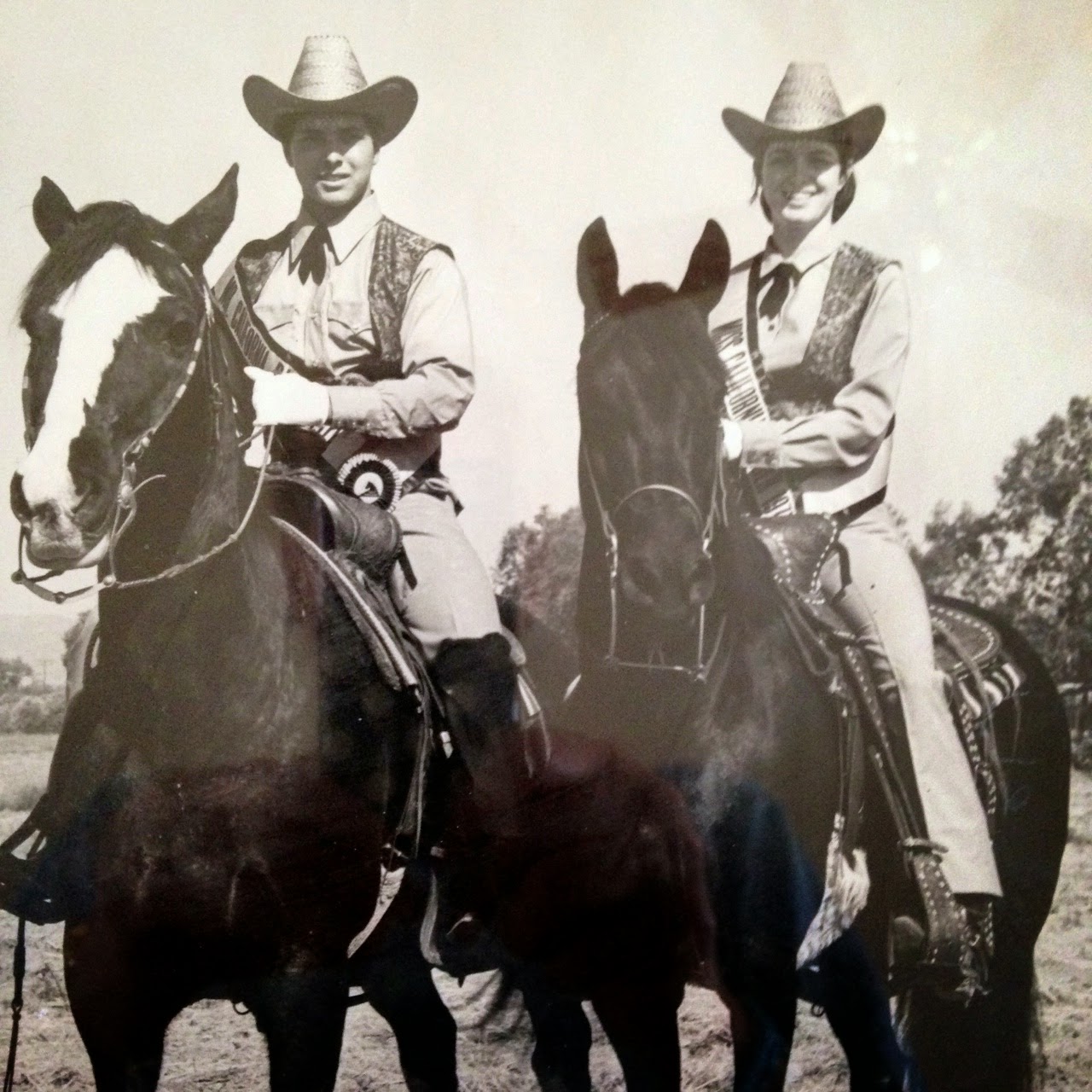
Laura Young, when Miss Calif. Ranger
Late winter & early spring have been typically busy with this-n-that (college tennis umpiring, fire-season and garden prep, SiteWatch/site steward activities, and some yoga). Had a few opportunities to push/shovel snow from the driveway (80-yards long) and patio; want to keep the walkway to the hot tub clear. Last week I had a new time wrinkle: jury duty. As a retired Ranger/Special Agent (Law Enforcement Officer) I figured I’d never be selected, at least for a criminal trial. I’d previously shown up for panel selections (civil case) and been excused. This time I was selected to hear a lawsuit, and the trial ended last Friday evening. I know many of us have heard that anyone can get “not selected” and we end up with “only idiots” on our juries. I heard exactly that during the recent process, but I believe it is part of our “civic duty.” Those “getting out” of jury duty, and complaining about the judicial system, should re-evaluate their decision: juries are a panel of judges. The system can sure use thoughtful and informed jurors. Anyway, it got me for a few days.
Hooves & Dust series
Overall, I enjoyed the experience (unlike a letter to the editor in yesterday’s SF New Mexican (SFNM), about his previous panel experience: likened it to “involuntary servitude”).  The case revolved around two horses, their care & treatment. The allegations were published by the SFNM when the case was filed in 2012 (I found a link post-trial, as pre-trial we were instructed to do no research or field trips). Here is the link:  http://www.santafenewmexican.com/news/local_news/suit-alleges-lamy-stable-caused-horse-s-death/article_d8502aad-4377-5ffe-ba04-d12327d0f769.html 

Hooves & Dust series
Like many National Park Rangers I have a long bond with our equine amigos. In the jury selection process the panel pool of 99 prospective jurors were asked by show of hands: how many of you, or your families, owned a horse? Being a good New Mexico cross-section about half raised our hands (and I was mentally transported back to riding our Morgan mare on Griffith Park bridal trails whenever I was home on leave from the Navy, or during breaks in college). When we were asked: how many of you boarded your horse? Only 3 or 4 of us raised our hands (and I was again remembering another time & place, at a residence/stall in the Pickwick area of Burbank, CA).

Justin - Mineral King trip
The story of National Park Rangers, and many parks in this country, go hand-in-hand with horses; I also had memories of our family horse-pack trip into the backcountry of Mineral King when Justin was 4. This trial seemed like a natural fit for this Ol’ Ranger, considering some of the places I’d been stationed, or worked on assignments, and the horseshoeing experiences and tools I possessed. Even one of my former investigative partners, Tony Bonanno, had received some acclaim for his photo series: Hooves & Dust – so, seemed like a good fit to me.  http://bonannophoto.com/Home/tabid/36/Default.aspx

Tony Bonanno & Friend: All Hooves & Dust series photos are courtesy of TB.

Hooves & Dust series
The trial (or trail) began with the judge setting the tone and ground-rules (he was very fair, impartial & patient throughout, as he needed to be); the attorneys made their opening statements, giving their perspectives on what happened back in 2009, and what would be presented. Then the attorney presented the plaintiff’s case: there were a series of witnesses, including the plaintiff, that testified. Some were character witnesses and others were experts in fields like equestrian surgery. Most were very credible (more about that in a moment).


Hooves & Dust series
The plaintiff is permanently disabled with chemical and electrical sensitivities that precluded her from appearing in court for the proceedings. Due to these, she testified via telephone. She had two horses boarded at a ranch from 2007 to July 2009: one a 36-year old gelding (Joe) and the other a younger Rocky Mountain mare (Nena). Her case was basically that she loved her horses “like children”, had trained them to be therapy animals, they were non-allergenic, and she hoped to clone the gelding. However, while she was on a trip to Colorado one Sunday morning the defendants euthanized Joe without her permission, depriving her of the ability to treat him with her Christian Scientist methods; and the defendants mentally traumatized and mistreated Nena (injuring her), and then withheld proper food & water from her. The plaintiff removed Nena from the ranch the middle of that week. After filing the suit 3-year & 2-months later, one of the defendants visited Nena’s stable potentially spooking and injuring her.

a swayback horse
The defendant’s attorney painted a much different picture through a series of witnesses: Joe was a much beloved “very old, swayback” horse (36) with “senior privileges” (allowed to roam the ranch’s stable area), had severe degenerative arthritis diagnosed & documented in 1991 (the farrier had been unable to lift Joe’s hoof normally for years), the ranch/stable manager & veterinarian had left multiple phone messages for the plaintiff on the day they found Joe barely able to move and in pain (the amount of pain & immobility made it an emergency); the “standard of care” for New Mexico was met and the treatment was “reasonable & customary” for the conditions;
an arthritic knee
The plaintiff never returned any of the defendant’s calls/voice-messages. Witnesses stated Nena was fine during the timeframe in question, and there was veterinarian clinic documentation showing Nena was uninjured one-year after the incident. There was video footage of the visit to Nena, and she appeared fine; there was blood test results indicating that Nena had been exposed to Equine protozoal myeloencephalitis (EPM), which could explain changed behaviors and leading to injuries. In addition, there was testimony to there being no such thing as a non-allergenic horse. All boarders signed a standard agreement delegating emergency medical authorizations, and cloning is a very expensive process for horses (up to $1.5M for positive result).
I can’t speak specifically for my fellow jurors; our deliberations were confidential. Generally, we found the witnesses as credible (except the plaintiff). During closing summations the defense attorney described the plaintiff as disabled, which we ALL have sympathy for, but she uses hers “as a sword.” From her testimony, and that of her medical doctor (a chemical sensitivities advocate), it appears to be the case.
It was interesting to note that in twelve appointments with her doctor (“advocate”) between 2009-2012 she didn’t mention the loss of Joe or the injury to Nena, but about the previous loss of her dog. Then in 2012, after she lost a civil suit against Terminex, her next 33 appointments bemoaned her apparently delayed/re-found grief for Joe. She was able to articulate her needs (a new home with 75’ lap pool and therapy room) and for her horses (life-long chiropractic, aroma therapy and stretching exercises/yoga). 
Hooves & Dust series
The jury seriously deliberated the information we had been provided (as instructed), shared our lighter interpretations as well, and then fairly quickly & unanimously made our decision, which I was entrusted to sign & deliver: we found in favor of the defendants.


HAPPY TRAILS  (and justice) to ALL...